Educated citizens — successful cities. Magdeburg experience for Zaporizhzhia
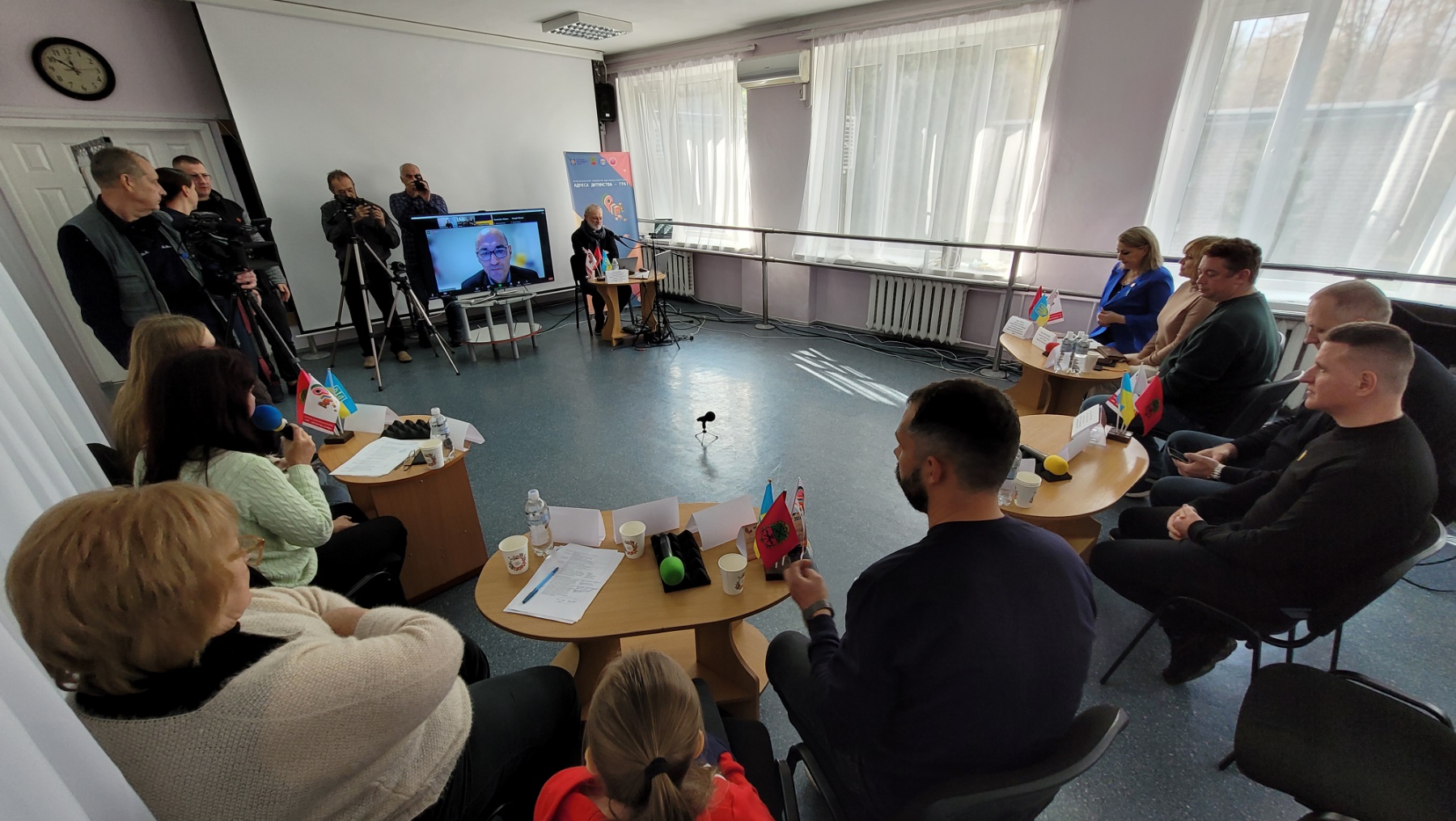
“What will Zaporizhzhia be like after the victory, what makes a happy city, and what role education plays in community development — these questions were discussed by the participants of an international conference in Zaporizhzhia.
The conference, titled “From Fortress City to Didactopolis,” marked the conclusion of the 13th All-Ukrainian Festival “Childhood Address — Play!”
The event brought together officials from the Zaporizhzhia City Council, Ukrainian educators, cultural activists, and practitioners in the field of leisure. Foreign experts also joined the online event, including a guest from our twin city, Magdeburg — Mr. Ralf Liebe, the director of the municipal adult education center (Städtische Volkshochschule Magdeburg).
Education is one of the priorities of the city’s community development. Because we see educated population is one of the requirements for future community development. We face a lot of challengers nowadays, such as demographic change, digitalization, shortage of skilled workers, migration, integration, climate change. And although education itself will not solve all these problems, it can contribute to the solutions, says Mr. Ralf Liebe.
Magdeburg prioritizes the development of a vast and diverse education infrastructure for citizens of all ages. According to Mr. Liebe, a modern city should create proper conditions for people’s lifelong learning, not just teaching but rather “giving them room to discover their own possibilities.”

There is a growing awareness among people, in city council of Magdeburg and municipality administration, that education is so much more than just school, or vocational training, or university. But learning continues through our life-span. And so the focus now is on life-long learning. And that’s why the city is participating in several projects funded by the Federal Government which focus on an integrated educational landscape or infrastructure. And one of the challenges is to monitor and manage transitions from one educational sector to the next one, for example, from primary school to the secondary, from secondary to vocational training. And the current project is to improve this monitoring and provide a comprehensive overview of all educational activities in the city in order to enable decision makers to make good decisions. Once a year, we organize a conference to discuss our education contributes to city’s development and which steps to take next.
During his presentation, Ralf Liebe mentioned the volunteer agency that has been operating in Magdeburg since 2006. They provide counseling “to both citizens interested in volunteer work and institutions looking for people who want to work voluntarily.” This experience is particularly interesting for Ukrainian cities, which are currently seeking ways to support their volunteer community.
The City Development Institute of Zaporizhzhia expresses sincere gratitude to the partners from Magdeburg, especially Mr. Ralf Liebe for his contribution to the conference and inspiring presentation, and to Ms. Annica Hilger for supporting the idea of German-Ukrainian dialogue about education and the future.
Photos from the Facebook page of the Festival.